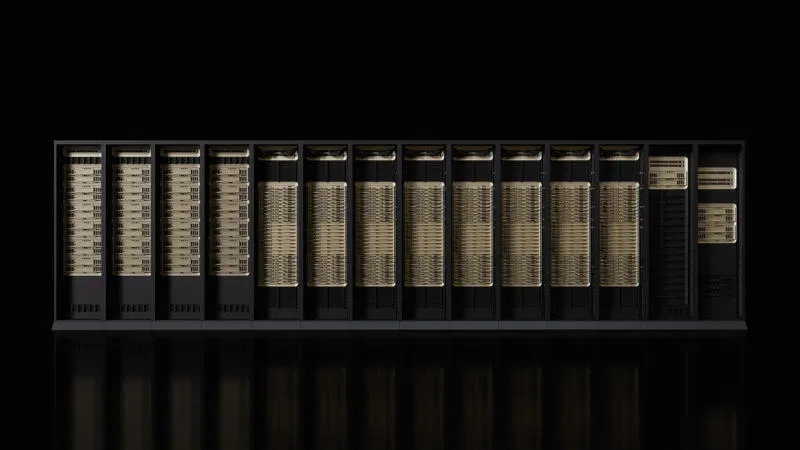
Nvidia has ordered its manufacturing partners to stop supplying servers to four countries in Southeast Asia. The decision was made in accordance with the desire of the American authorities to tighten export controls and prevent China from gaining access to the computing power necessary for the development of artificial intelligence.
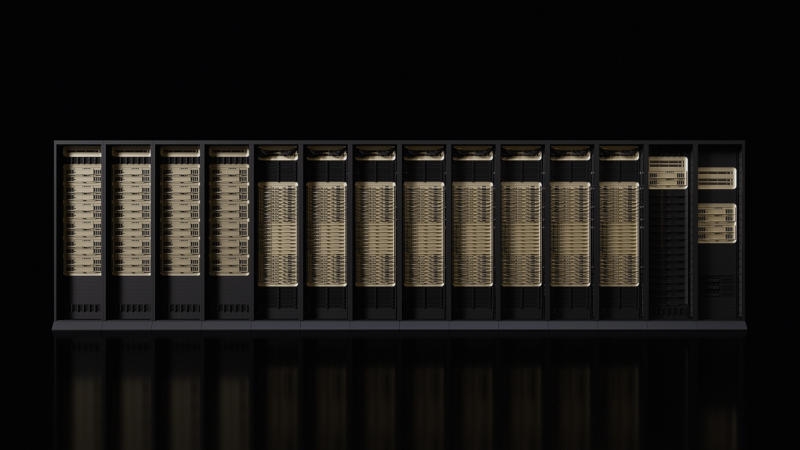
Image source: nvidia.com
Dell, Supermicro and other companies that assemble servers based on Nvidia chips have notified their customers in Malaysia, Singapore, Thailand and Indonesia that Nvidia has blocked shipment of their orders. Whether this suspension is a temporary measure is not yet clear: Nvidia and its partners are trying to determine how exactly to comply with the new export restrictions imposed by Washington.
These four Southeast Asian countries have become popular destinations for Chinese AI developers seeking access to cutting-edge Nvidia chips, the export of which to China has been restricted by US authorities. For Nvidia, this region is profitable: in 2025, revenue through the Singapore division grew by 72% year-on-year and reached $104 billion; Through the Singapore branch, part of the income received in Taiwan and China is also taken into account.
Many Chinese companies are getting around US export restrictions by renting computing power from cloud providers that buy servers on Nvidia chips. Last week, the US Department of Commerce introduced new regulations aimed at curbing such practices. These measures were taken shortly after Jensen Huang briefly stepped down as Nvidia CEO. He admitted to being involved with a woman suspected of working for Chinese intelligence – an incident that undermined Huang, who had previously argued that the US should sell Nvidia equipment to Chinese companies to increase their dependence on US technology.
Despite Beijing’s push to develop its own equivalents of this hardware, leading Chinese AI labs still rely heavily on Nvidia accelerators to develop flagship models, especially in the early stages of training, which require huge computing resources. It was hoped that with Huang’s return the new rules would be applied more leniently, but so far there are no signs of this. The Ministry of Justice gave cloud providers a 90-day period to obtain a license – they must prove that among their end users there are no organizations subject to restrictions.
Demand from Chinese technology companies has fueled a data center boom in Southeast Asia, primarily in Malaysia and Indonesia, where billions of dollars have been poured into building AI infrastructure. New US restrictions have put much of this investment at risk. Among the victims is the Singaporean cloud company Aolani, which planned to allocate power to the Chinese ByteDance (owns TikTok). Under the new conditions, bankers who had previously agreed to finance the project suspended issuing loans in the amount of about $500 million, and ByteDance itself can now refuse the deal.
If you notice an error, select it with the mouse and press CTRL+ENTER.